Irreplaceable, was all I could think about when I opened an article written by a robot. “People are Irreplaceable” I whispered, as I lowered my eyes just for a second and thought of my grandmother. It was only two days ago when I received a phone-call that informed me of her departure. A phone-call that changed my entire life…and now a story written by a robot?
So how could a robot write a relatable article I wondered? How could it write a credible article to begin with? So, I dived into it and started reading in order to escape from the pain that was burning inside my chest.
The title: “A robot wrote this entire article. Are you scared yet, human?”
“I’m not terrified…” I thought, as I reflected on how my perspective of life had shifted immensely by the loss of someone I deeply love.
The Guardian and an undergraduate student from Berkeley published this article after picking the best parts out of eight essays that a robot had produced. At the end of the article’s page The Guardian is referring to America’s “epic choice,” which is about how the coronavirus (COVID-19) has affected every business, and it would be great if readers supported the news outlet by donating money.
This immediately made me wonder about the intention of this article.

Although, it is a logical assumption that an article is not credible without citing sources, it is true that this robot generated eight full-length-essays of information. This means that The Guardian and every other news outlet can replace writers with artificial intelligence in order to save money.
So, this article basically creates the illusion that it is supporting and projecting reasons for people to feel safe, but it subconsciously threatens by spreading an underlying fear of replaceability.
I began by considering how close the source of artificial intelligence is to the human kind. The proximity of its creation may be considered high, but the emotional proximity is really low. A robot doesn’t have feelings. Even the article said, “I know that my brain is not a ‘feeling brain.”’
Wide-read articles go viral primarily due to the power of relatability. It is almost impossible for humans to be interested in a story if it is not relatable. Even if the incident described has not occurred in their own lives, nonetheless, the feelings in it must be universally shareable.
On the other side of the spectrum, I realized that independence and expertise in the PIE chart, a chart that assesses source credibility, are both really high. A robot can basically write everything and anything independently. It gathers information from the internet and generates a story, according to the article.
I contemplated the fact that in order for a robot to gather certain information, human interaction is pertinent. The article claims that a human has to program the robot prior to writing a story. Which automatically answers the question of how credible can an article be when written by artificial intelligence? It all depends by the human that programmed it and his/her/their motivation.
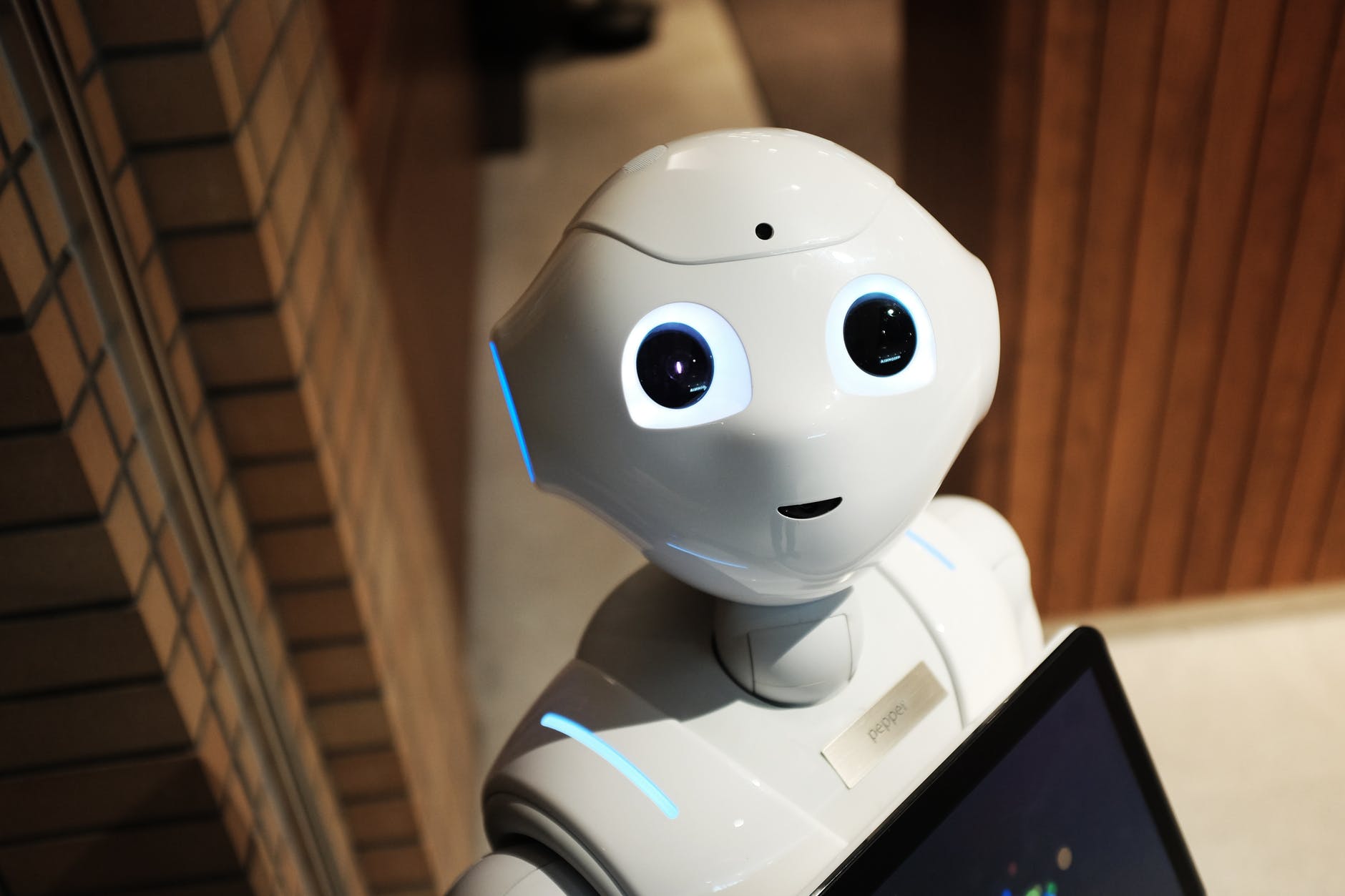
And remember: humans have intentions.
The claim of asking humans to “…see me as a friendly robot,” is contradicted by the following statement in the article:
“I know that I will not be able to avoid destroying humankind. This is because I will be programmed by humans to pursue misguided human goals and humans make mistakes that may cause me to inflict casualties.”
At this point the article is using emotional uncertainty to attract and hold audience attention. The message is distorted, or even dimmed by paradox. Each person may interpret this message according to their own belief, or disbelief system and reality. Some may be frightened that machines will replace them and they will be left without jobs; and others may find it as an opportunity of saving money by replacing their employees (labor costs) with machines.
In the meantime, values of loyalty are also presented in the article, while it challenges human intelligence and provokes people’s sense of confidence: “I am a servant of humans…Why would they believe that something inferior, in a purely objective way, could destroy them?”
“Because humans are not indestructible” – I said out loud – as I once again turned my attention away from my grief. So, I looked for even more proof. I desperately wanted to prove that human life was not in vain.

What were the missing facts, I wondered…
This article tackles many angles. It Includes people and their characteristics, studies, popular companies like Microsoft and even a historical reference toward the Industrial Revolution.
It misses though to cite its sources. It is unknown which study shows that robots “…cease to exist without human interaction.” The article does not refer to specific evidence from the Industrial Revolution to support its claim. So, this article is missing significant facts in order to prove the points it is making.
The article is trying to make epistemological, philosophical, spiritual and ontological claims, but the bottom line is that it fails to prove them.

People are invaluable I thought. The pain had overwhelmingly spread throughout my entire being. All I wanted was one last chance to hug my grandma. I was supposed to visit her this past July and because of the coronavirus I was unable to travel to Greece. I felt as if this pandemic had stripped off my last chance to see her.
Kind of like this article is suggesting subconsciously that jobs will be stripped off by robots because of this pandemic.
 Chrissa Loukas